You’re operating in one of Southeast Asia’s most demanding freight corridors, where regulatory frameworks, border agencies, and documentation requirements converge into a single high-pressure crossing. Every delay compounds downstream costs, and time-sensitive cargo leaves almost no margin for error. Understanding what’s actually slowing shipments down—and what’s genuinely fixing it—requires a closer look at the operational realities most operators only discover once things go wrong.
The Real Complexity Behind Malaysia-Singapore Cross-Border Trucking
While cross-border trucking between Malaysia and Singapore may appear straightforward on the surface, it’s a logistical undertaking that demands precise coordination across multiple regulatory frameworks, border agencies, and operational variables. When you’re managing cross border trucking Malaysia to Singapore, you’re steering customs documentation, weight restrictions, permit requirements, and time-sensitive cargo—all simultaneously. One misstep disrupts the entire supply chain.
The Biggest Bottlenecks Slowing Down Cross-Border Trucking Today
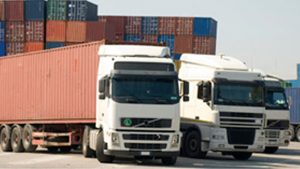
Understanding the complexity is one thing—knowing where the system actually breaks down is another. You’re dealing with three recurring bottlenecks: permit processing delays at checkpoints, mismatched operating hours between Malaysian and Singaporean customs, and incomplete cargo documentation triggering manual inspections. Each compounds the others. One missing permit stalls an entire convoy, costing you hours—sometimes days—of valuable transit time.
How Digital Tools Are Solving Malaysia-Singapore Freight Delays
Digital tools are cutting through the bureaucratic delays that have long plagued Malaysia-Singapore freight corridors. Platforms like TraQiQ and Singapore’s Networked Trade Platform let you submit customs declarations digitally, slashing processing times significantly. Real-time GPS tracking gives you full shipment visibility, while AI-powered route optimization helps you avoid congestion at the Johor Causeway. You’re no longer dependent on paper-heavy processes that historically caused costly, unpredictable delays.
What the Future Holds for Malaysia-Singapore Cross-Border Trucking Operators?
Technology has already reshaped how you move freight across the Johor-Singapore corridor, but the structural forces ahead will demand even deeper adaptation. Electrification mandates, tightening emissions standards, and cross-border data integration will redefine your operational baseline. You’ll need to invest in compliant fleets, retrain drivers, and align with evolving customs frameworks. Operators who treat these shifts as opportunities rather than burdens will lead the corridor.